
Cruising with Kids with Disabilities: An Honest Guide for Families
Autism, Down syndrome, sensory sensitivities — which family cruise lines actually support your child, real advice from parents who've done it, and what to have in place before you sail.
By Joey Boleslawski — founder of Seabound Journeys, CLIA-affiliated travel advisor, and Florida Seller of Travel (Ref. No. ST15578).
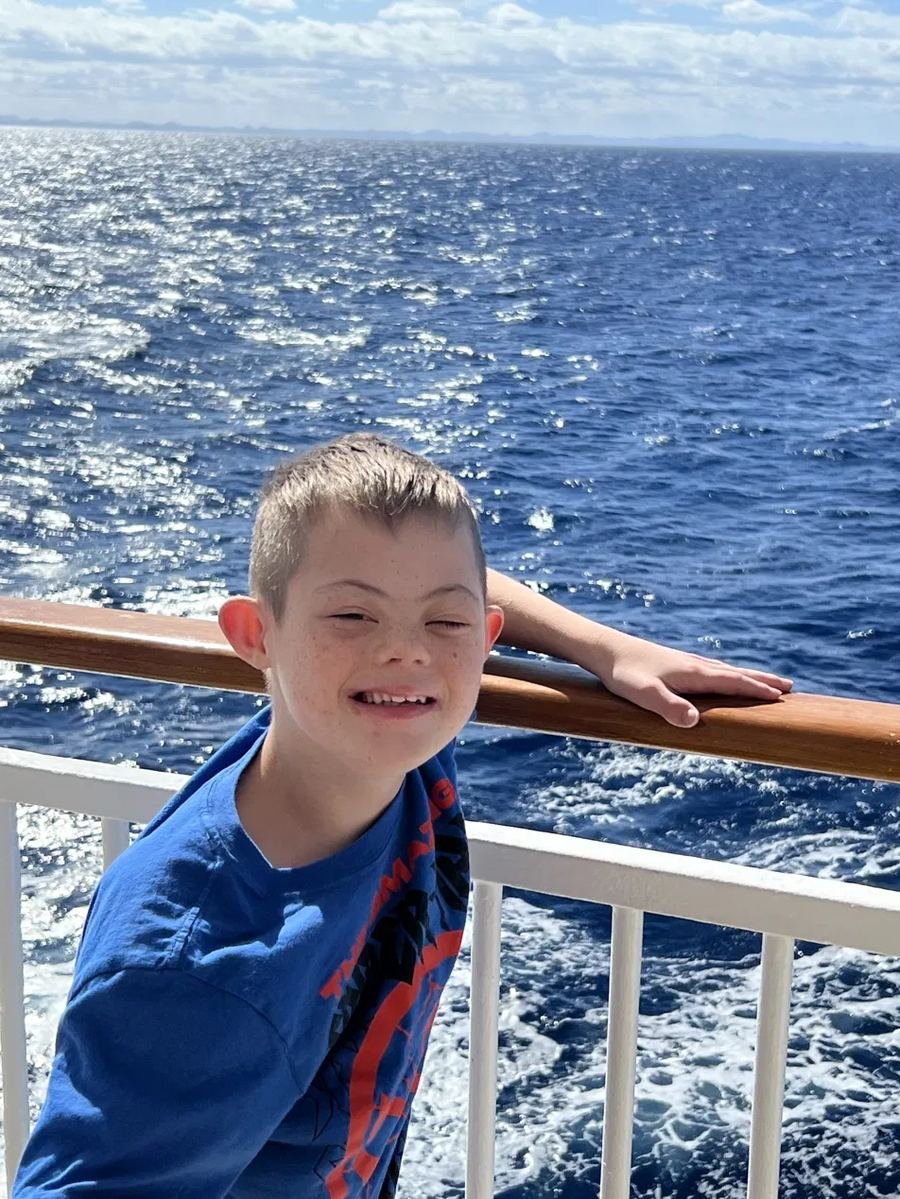
Cruising with a child who has a disability — autism, Down syndrome, sensory processing differences, developmental delays — can be one of the best family vacation decisions you ever make, or a deeply stressful experience you vow never to repeat. The difference almost always comes down to preparation and choosing the right line. As advisors who work with special needs families regularly, here's the honest picture no brochure gives you.
Why cruising can actually work well for special needs families
Veteran parents in the special needs community consistently point out one thing that surprises outsiders: a cruise ship is a controlled environment. You unpack once. Meals are predictable and available almost around the clock. The layout stays the same every day. For kids who need routine and struggle with transitions, that consistency is a genuine gift — no daily hotel changes, no loading the car, no picking a new restaurant every night.
The ocean itself is also a factor. Many families report that their kids with autism or sensory sensitivities sleep better at sea than anywhere else. The white noise, the gentle motion, the reduction in typical overstimulation — it works for a lot of kids, though not all.
Port days are also optional. If going ashore is too much on a given day, you stay on the ship while most passengers are off — and have it nearly to yourselves. That kind of flexibility is hard to find in any other vacation format.
Disney Cruise Line: the gold standard, with real caveats
Disney is the most talked-about line in special needs family circles, and for good reason. Their accessibility team will speak with you before sailing to understand your child's specific needs. The kids clubs — the Oceaneer Club and Lab — have staff trained to work with children across a range of developmental differences, and one-on-one support arrangements can sometimes be accommodated when requested well in advance. Character meet-and-greets can be pre-arranged as quieter, private moments rather than long queue experiences that overwhelm many kids.
Families who've done this consistently give the same advice: call Disney's accessibility services before you book, not after. They are genuinely responsive and will tell you honestly whether a specific sailing or ship suits your child's profile.
The trade-offs are real. Disney ships are visually stimulating and busy — beautiful, joyful chaos that delights many kids and overwhelms others. The cost is the highest in the family cruise market. And while staff are caring and trained, they are not therapists or dedicated aides. Your child will need their usual support from you or a traveling companion throughout the trip.
Royal Caribbean: best large-ship option for special needs families
Royal Caribbean has one of the stronger accessibility records in the family cruise industry. Their Adventure Ocean program is trained in inclusion practices and can offer modified participation for children with cognitive and developmental disabilities who don't fit neatly into the standard age-group model. It's worth calling ahead to discuss your child specifically — the experience varies by ship and sailing.
Parents in autism communities often find Royal Caribbean's newer Oasis and Icon class ships more manageable than expected, because of the neighborhood layout. Different zones of the ship have genuinely different energy levels. The Central Park area, open-air and relatively calm, becomes a go-to for families who need a reset from the busy pool deck. Having that variety within one ship matters a lot over a seven-day sailing.
The honest caveat: these are enormous ships carrying 5,000-plus guests. Crowded elevators, loud pool decks, and long corridors are part of the deal. Families who do well here are those who learn the ship's rhythm quickly — eating at off-peak times, hitting quieter areas proactively, and protecting downtime rather than trying to fill every hour.
MSC Cruises: strong value, thinner support infrastructure
MSC offers some of the best family pricing in the industry, and their newer ships have genuinely impressive facilities — waterparks, kids areas, and visual wow-factor that lands well with many kids. They do have an accessibility program, and staff are willing. The honest gap is depth: kids programming and trained support infrastructure doesn't match Disney or Royal Caribbean. Families who've traveled MSC with special needs kids often report needing to advocate more and having to create more structure themselves.
The international, European-style onboard experience also surprises some American families — quieter announcements, different dining rhythms, more languages in the kids areas. For some families that's neutral; for kids who rely on predictable social cues, it can add friction.
Norwegian and Carnival: workable, with realistic expectations
Both lines have accessibility programs and willing staff, and plenty of special needs families have had good experiences on both. Norwegian's freestyle dining — no fixed times, eat when you want — actually suits some kids with rigid eating schedules better than traditional assigned dining. Carnival's ships are lively and unpretentious, fares are affordable, and the shorter itineraries can be a good starting point for families unsure how their child will handle the cruise environment.
The trade-off on both lines is that kids programming is less developed than Disney or Royal Caribbean, which means less trained support available in the clubs. These aren't wrong choices — they're lines where the family needs to go in with realistic expectations and more of their own preparation in place.
What families who've done this actually say
Consistent themes from special needs families across all lines:
- Submit the accessibility form as early as possible. Every major family cruise line has one. It unlocks accommodations — priority boarding, specific cabin assignments, dietary adjustments — that aren't available any other way. Don't wait until you're close to sailing.
- Cabin location matters more than most families realize. Midship, lower decks reduce motion for kids who don't regulate well when unsettled. Away from the pool deck cuts noise significantly. Close to an elevator if mobility is a factor. If a wheelchair or scooter is part of the trip, our wheelchair-accessible cruising guide covers the cabin, the equipment rules and the route ashore. These aren't always the least expensive cabins — the upgrade is usually worth it.
- Embarkation day is the hardest. Crowds, new smells, sensory overload, delayed cabin access — the first few hours are genuinely tough. Pack a bag with familiar snacks, noise-canceling headphones, and comfort items specifically for that window. Once the ship sails and routine begins, most families find things settle considerably.
- Build in more downtime than you think you need. Families who try to hit every port and maximize every activity are the ones who report the worst experiences. The families who come home talking about what a great trip it was usually skipped multiple ports and protected time for familiar ship routines and rest.
- Introduce your child to the kids club staff on day one. Don't assume staff will figure it out. Bring a one-page summary of your child if that helps — what works, what doesn't, what to do if they're overwhelmed. The families who invest in that relationship early have dramatically better outcomes.
- Bring documentation for all medications and know where the medical center is. Ship medical facilities are professional but limited. If your child has any seizure history, complex medical needs, or requires refrigerated medications, speak with the ship's medical staff on boarding day rather than waiting for a situation to arise.
If you're thinking about this for your family, we'd love to help you work through it. The right sailing depends on your child's specific profile, your family's comfort level, and which ship's layout and staff culture is actually the best fit — and that's a conversation worth having before you book anything.
Related reading: Is Celebrity Good for Families? • Traveling with a Child Who Has Special Needs